
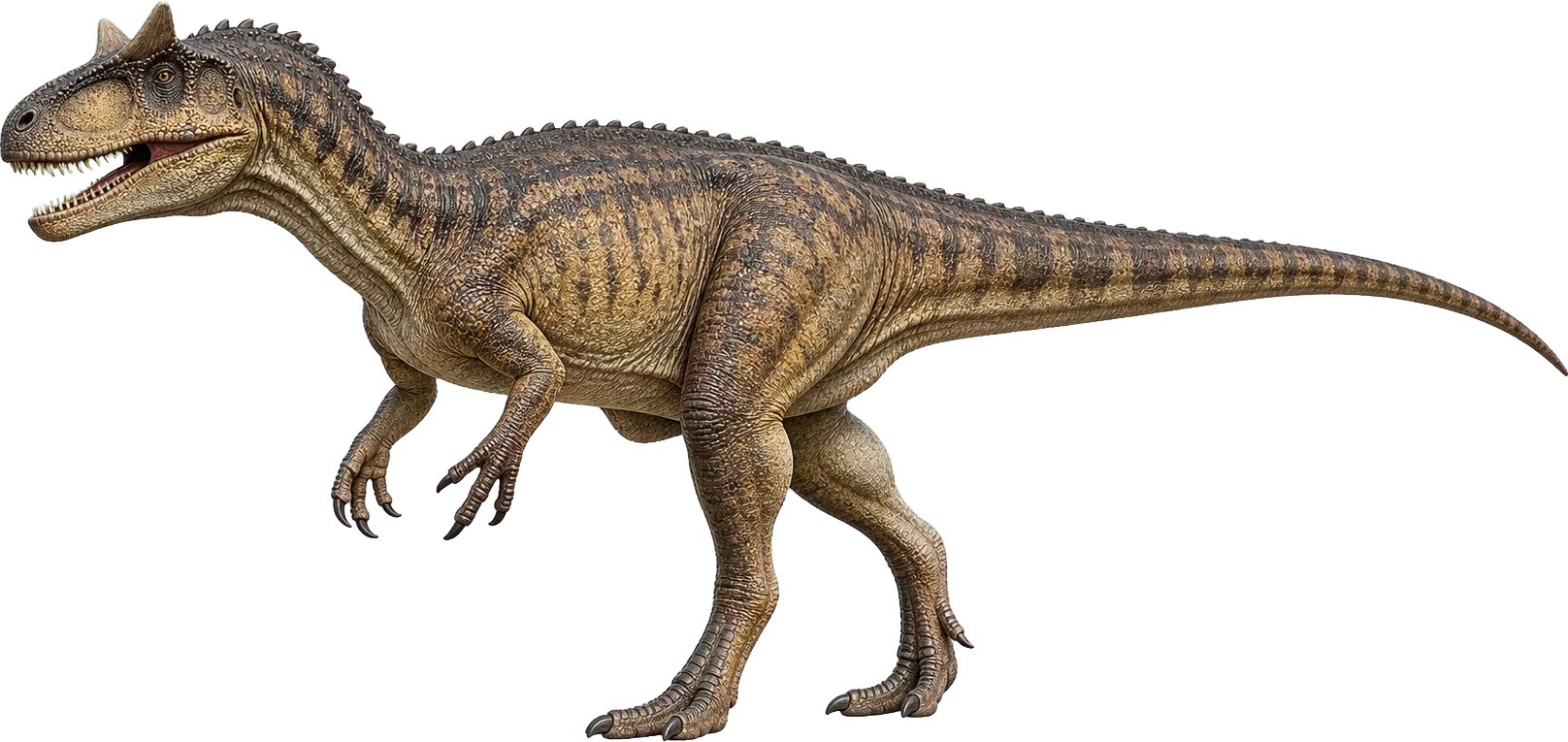
Allosaurus fragilis
Allosaurus for kids
Allosaurus was a big Jurassic predator with small brow horns, three-fingered hands, and teeth with saw-like edges.
The essentials
What should you know about this dinosaur?
- Length: 9.7 m long
- Height: 3.2 m tall
- Weight: about 2.7 tonnes
- Food: Meat eater
- Time: Jurassic
- Region: North America
How large was Allosaurus
The line shows standing body height. Head, back, and tail make the almost ten-meter length.
Compare in the toolLook a little closer
More about Allosaurus
Short chapters for curious children and grown-ups who want to read along.
Allosaurus
Allosaurus was one of the big predators of the Morrison Formation. Do not picture a T-Rex copy: the head was narrower, small horns sat above the eyes, and each hand had three clawed fingers. In the same river country lived Stegosaurus, Camptosaurus, and young long-neck dinosaurs. The teeth had serrated edges, almost like tiny saws. A long tail balanced the body while the heavy head searched and snapped up front.
Size
Allosaurus was almost ten meters long, but not huge in a long-neck way. Its size ran through the whole line: skull in front, strong hips in the middle, tail stretching far behind. The legs stood under the body so the weight stayed steady. Trace the outline and it starts at the snout, runs over the back, and ends far back at the balancing tail.
9.7 m long2.7 tonneslong balancing tail
Food
Allosaurus ate meat, and the good detective clue sits in the teeth. They curved backward and had serrated edges. That helped prey stay caught, and a bite could cut. In its Morrison world lived Camptosaurus, Stegosaurus, and young sauropods. Tooth shapes like these can leave marks on fossil bones; then a big skull turns into real clue-hunting.
meat eaterserrated teethMorrison prey
Habitat
The Morrison Formation lay in western North America and saved a whole Jurassic world. It held rivers, dry plains, plant patches, and muddy places that could later seal bones inside. Allosaurus did not move through that land alone. Diplodocus, Apatosaurus, Stegosaurus, Camptosaurus, and many smaller animals belonged there too. Morrison is more than a fossil place: it is a treasure map made of stone.
Morrison FormationLate JurassicNorth America
Defense
Allosaurus had no armor. Its equipment moved with the body: teeth in a strong skull, three clawed fingers on each hand, and powerful legs under the hips. The little brow horns were not pushing horns like Triceratops horns; they made the head easy to recognize. Around Stegosaurus, Allosaurus had to keep distance. Food stood in front, but tail spikes waited behind.
three fingersbrow hornsno armor
Speed
When Allosaurus moved, the tail did quiet work in the back. The head pulled forward, the tail held against it, and the hind legs pushed the body step by step. The arms stayed free near the chest, with three clawed fingers. Allosaurus was not lightweight, yet its two-legged body was well balanced: senses and teeth in front, balance behind, strong hips between.
two legsbalancing tailstrong hips
Did you know?
The name Allosaurus means different lizard. It got that name because some bones looked different from dinosaurs known at the time. Today Allosaurus is one of the most familiar Jurassic predators, partly because so many fossils are known. Some sites contain several animals. That lets museums show the shape well: brow horns, long snout, three fingers, and the tail reaching far behind.
different lizardmany fossilsolder than T-Rex
about 3.2 m tall
Beside a child, Allosaurus looks tall, but the real trick is length. The height line only catches the standing body. The skull reaches out in front, the tail keeps going behind, and together they make an almost ten-meter animal.
Keep reading
Related dinosaurs
Jurassic
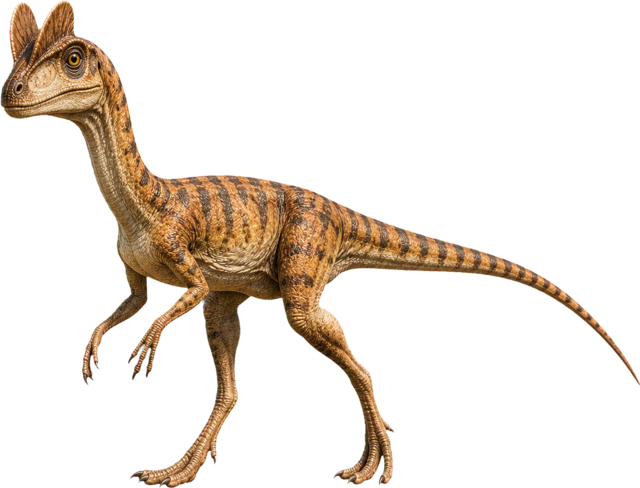
Dilophosaurus
Dilophosaurus was a large Early Jurassic predator with two thin bony crests on its head.
Read about this dinosaur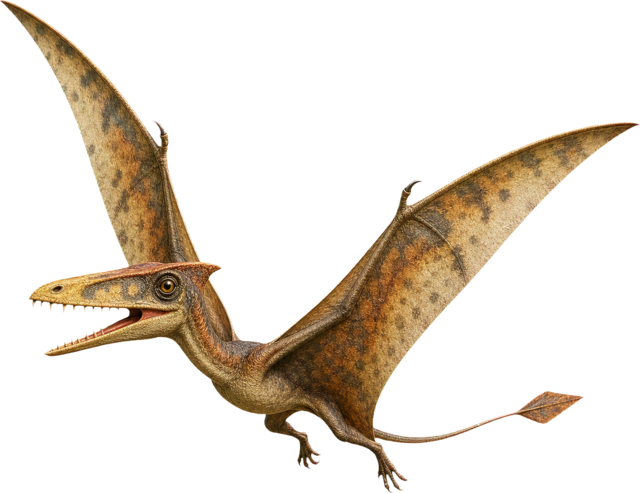
Jurassic
Dimorphodon
Dimorphodon was a pterosaur, not a dinosaur, with a large head and two different tooth shapes.
Read about this dinosaur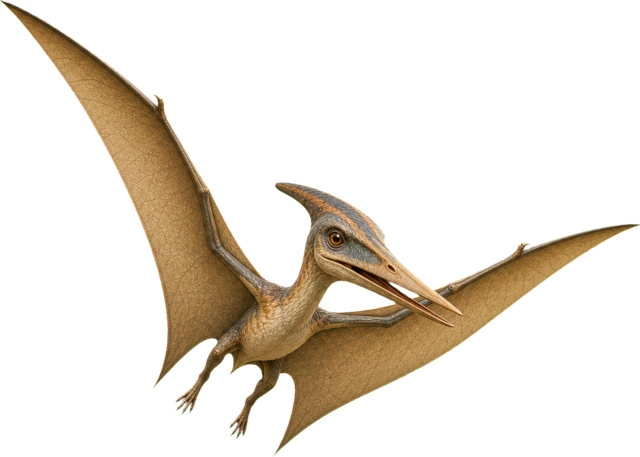
Jurassic
Pterodactylus
Pterodactylus was a small toothed pterosaur from the fine limestone of Solnhofen.
Read about this dinosaur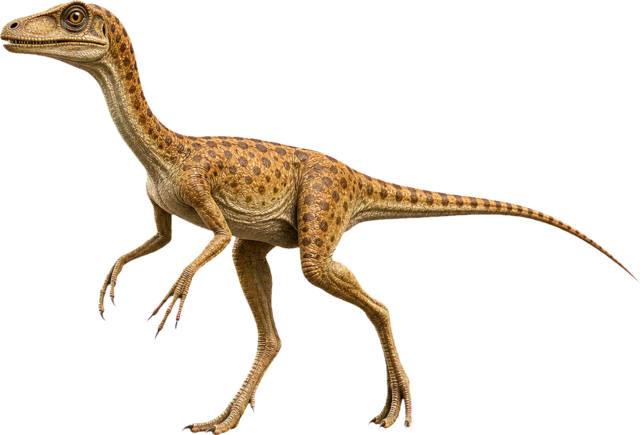
Jurassic
Compsognathus
Compsognathus was a very small Jurassic meat eater; fossils preserve bones of small lizards inside.
Read about this dinosaurSources and review
How this page is checked
Names, periods, locations, diets, and size estimates are compared with museum and paleontology reference collections. Estimates are rounded and updated when the underlying content changes.
Last content review: June 22, 2026
Read our research method and sources