
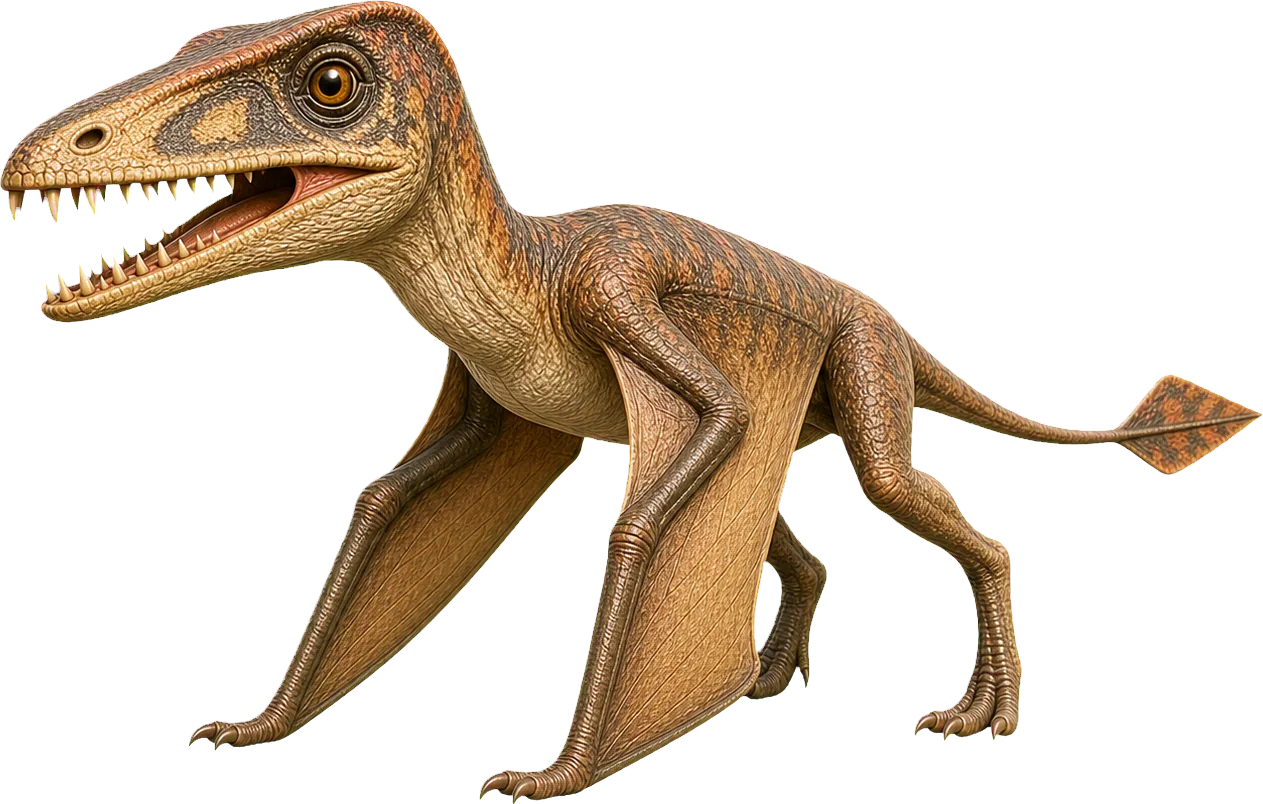
Dimorphodon macronyx
Dimorphodon for kids
Dimorphodon was a pterosaur, not a dinosaur, with a large head and two different tooth shapes.
The essentials
What should you know about this dinosaur?
- Wingspan: 1.7 m wingspan
- Height: about 0.4 m tall
- Weight: about 2 kg
- Food: Meat eater
- Time: Jurassic
- Region: England
How large was Dimorphodon
The height line shows the standing body. Wingspan belongs to flight and is much wider.
Compare in the toolLook a little closer
More about Dimorphodon
Short chapters for curious children and grown-ups who want to read along.
Dimorphodon
Dimorphodon belongs to the pterosaurs. They were flying reptiles from the age of dinosaurs, but they were not dinosaurs. Its name means two-form tooth, because the teeth at the front and back of the mouth had different shapes. Fossils come from the English coast near Lyme Regis, the world of Mary Anning. Dimorphodon had a surprisingly large head, a long tail, and skin wings stretched along an extra-long finger. A strange little Jurassic flyer.
Size
Dimorphodon was not big in body height. The wingspan was much wider than the standing body was tall. On the ground, folded-wing body height counts, not flight width. That matters with pterosaurs: an animal can look small on the ground and suddenly need a lot of space in the air.
1.7 m wingspan0.4 m tallsmall body
Food
Dimorphodon ate small animals. The front teeth were longer, and the back teeth had a different shape; the name comes exactly from those two shapes. Teeth like those fit grabbing fish, small vertebrates, or insects. The head was large for such a small body. With Dimorphodon, the food clue sits right in the mouth: two tooth shapes, one pterosaur face.
meat eatertwo tooth shapessmall animals
Habitat
Dimorphodon fossils point to the Dorset coast of England. Lyme Regis is famous for fossils from sea cliffs and for Mary Anning, who made important finds there. The Jurassic setting included sea, islands, and shorelines. A pterosaur fit that world well: walk, climb, launch, and search above water and beach areas for food.
EnglandLyme RegisJurassic coast
Protection
Dimorphodon was neither dinosaur nor bird. Its wings were skin sails held by an extremely long fourth finger. On the ground, it used wing-arms and legs. Protection meant light build, teeth, and getting away, not armor. The long tail helped with steering. It was a reptile using the air in its own odd way.
pterosaurfinger winglong tail
Movement
Dimorphodon's wings were not extra arms. The wing was the arm itself, with one giant finger stretching the skin. On the ground it stood on four limbs. In the air it beat or glided on those skin wings. Stranger than a bird: a reptile whose hand became a wing.
skin wingsfour limbswing finger
Did you know?
Dimorphodon means two-form tooth. Some prehistoric names point to horns or size; this one looks straight into the mouth. Delightfully nerdy: know the name, and you know what to spot. Two tooth types, large head, long tail, wing finger. For a small animal, Dimorphodon carries a lot of markers.
two-form toothlarge headMary Anning coast
about 0.4 m tall
Beside a child, Dimorphodon looks small on the ground. Wingspan is its big number, but the picture shows folded wings. That lets you see the body, not the whole air-space it used in flight.
Keep reading
Related dinosaurs
Jurassic
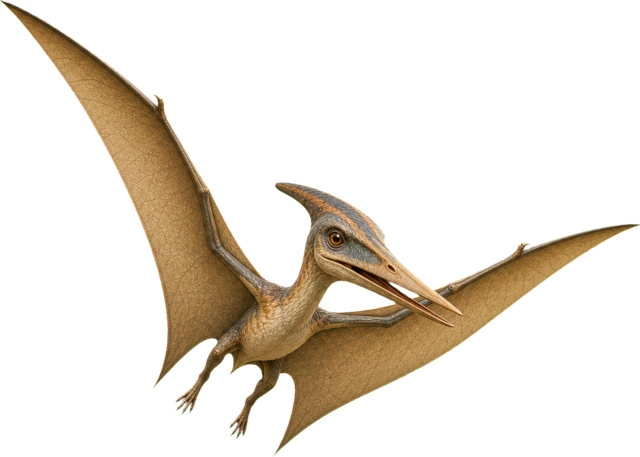
Pterodactylus
Pterodactylus was a small toothed pterosaur from the fine limestone of Solnhofen.
Read about this dinosaur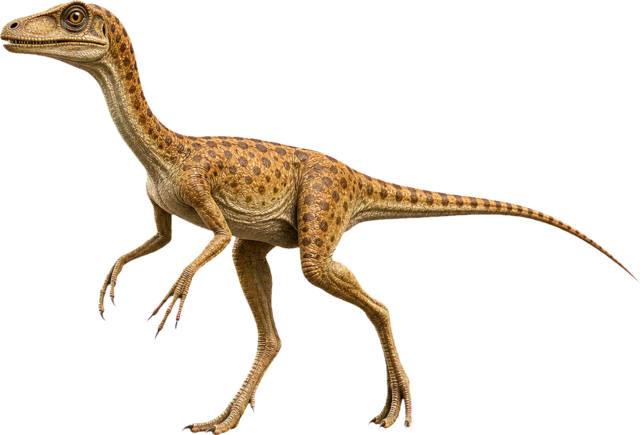
Jurassic
Compsognathus
Compsognathus was a very small Jurassic meat eater; fossils preserve bones of small lizards inside.
Read about this dinosaur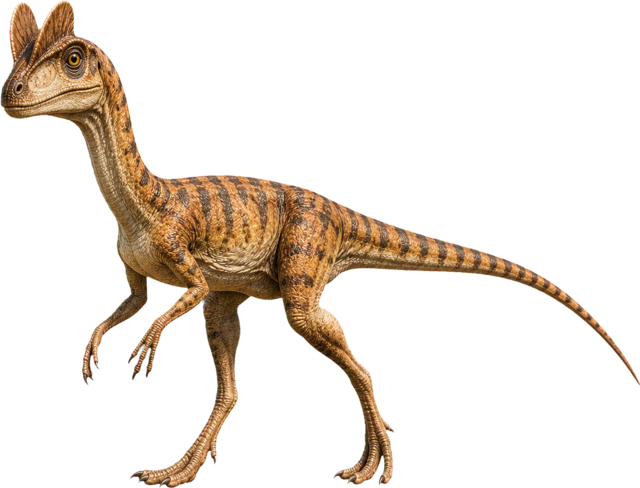
Jurassic
Dilophosaurus
Dilophosaurus was a large Early Jurassic predator with two thin bony crests on its head.
Read about this dinosaur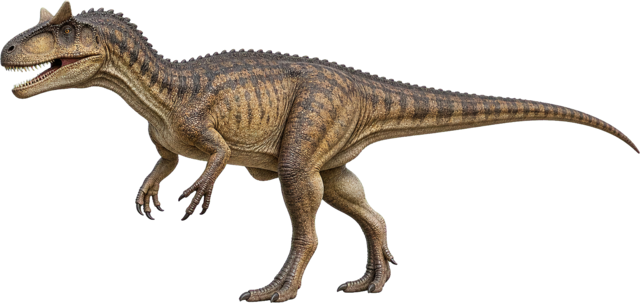
Jurassic
Allosaurus
Allosaurus was a big Jurassic predator with small brow horns, three-fingered hands, and teeth with saw-like edges.
Read about this dinosaurSources and review
How this page is checked
Names, periods, locations, diets, and size estimates are compared with museum and paleontology reference collections. Estimates are rounded and updated when the underlying content changes.
Last content review: June 22, 2026
Read our research method and sources