

Mosasaurus hoffmannii
Mosasaurus for kids
Mosasaurus was not a dinosaur, but a giant marine lizard with flippers, a powerful tail, and cone teeth.
The essentials
What should you know about this dinosaur?
- Length: 13 m long
- Height: about 1.8 m body depth
- Weight: about 8 tonnes
- Food: Meat eater
- Time: Cretaceous
- Region: ancient seas
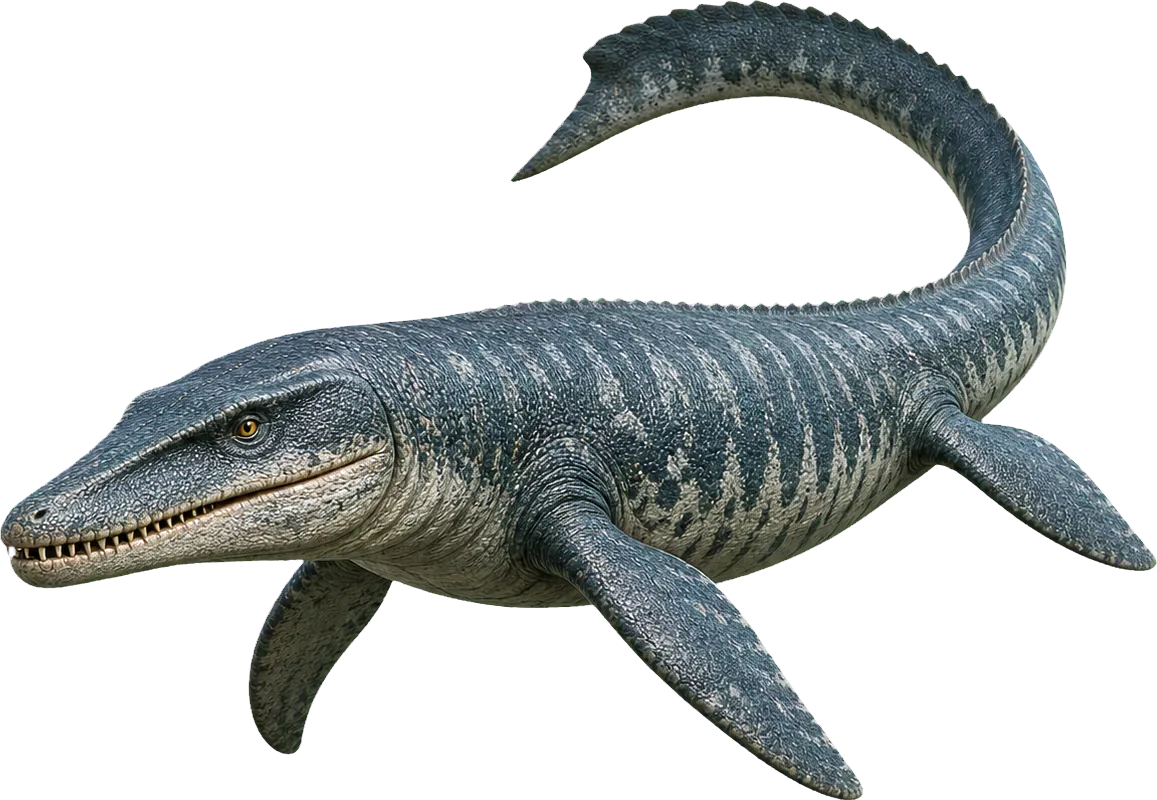
How large was Mosasaurus
The height line shows body thickness for comparison. Length is the key number for this sea animal.
Compare in the toolLook a little closer
More about Mosasaurus
Short chapters for curious children and grown-ups who want to read along.
Mosasaurus
Mosasaurus swam through Late Cretaceous seas while dinosaurs lived on land. It was not a dinosaur itself; it was a giant marine lizard relative. It is famous from limestone finds near Maastricht in the Netherlands. Instead of legs, it had flippers. The body was streamlined, and the tail pushed it through water. Cone-shaped teeth filled the jaws, fitting fish, ammonites, turtles, and other marine reptiles.
Size
Mosasaurus could reach about thirteen meters long. Its body height works differently from a standing dinosaur, because this animal was a swimmer. The body was long, the head large, and the flippers stuck out to the sides. In water, streamlining matters more than standing height. Picture a huge reptile body gliding through Cretaceous seas.
13 m longswimmerlarge head
Food
Mosasaurus ate meat from the sea. Fish, ammonites, turtles, and other marine reptiles all fit the kind of food its teeth and body could handle. The teeth were more cone-shaped, useful for holding slippery prey. It did not chew plants calmly. Mosasaurus was a large ocean hunter searching the water for movement and opportunity.
meat eaterfishammonites
Habitat
The name Mosasaurus connects to the Meuse region, especially Maastricht. Old skulls came from chalky limestone there long before dinosaurs became famous as a group. Its world was a warm Cretaceous sea, not a land forest. To understand Mosasaurus, think water: flippers instead of feet, tail thrust instead of stomping steps.
MaastrichtCretaceous seaNetherlands
Protection
Mosasaurus had no back armor like Ankylosaurus. Its protection came from size, teeth, and swimming power. Flippers helped it steer, and the tail drove it forward. In a sea with large fish, sharks, and other reptiles, a powerful body mattered. Mosasaurus was no gentle drifter; it was one of the big names of the Cretaceous sea.
flipperstail drivelarge teeth
Movement
Mosasaurus did not move with legs. It had flippers and a strong tail that pushed the body through water. The body was long and streamlined so it did not slow like a block. The flippers helped with steering. Totally different from land dinosaurs: glide, turn, surge forward.
no legsflippersstrong tail
Did you know?
Mosasaurus fossils became famous before the word dinosaur was invented. People found huge jaws in rock and had to work out what kind of animal they belonged to. Part of its wonder: it belongs to the Cretaceous world, but in its own water way. Not a dinosaur, not a whale, but an extinct marine lizard.
marine lizardMaastrichtearly fossil
about 1.8 m body depth
Beside a child, Mosasaurus looks lower than its length suggests because it was a swimmer. The thirteen meters run forward and backward through water, not upward on tall land legs.
Keep reading
Related dinosaurs
Cretaceous
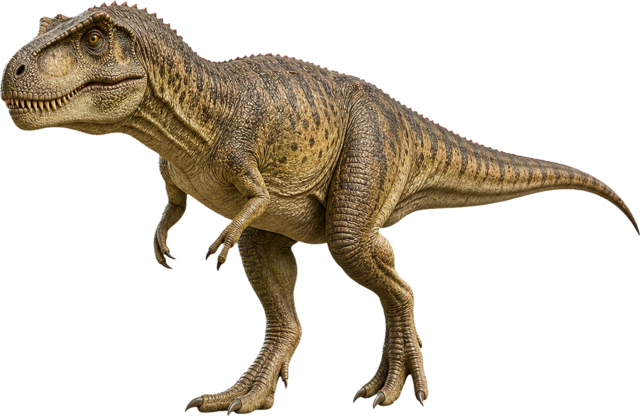
Giganotosaurus
Giganotosaurus was a huge meat eater from Patagonia, with a long skull and blade-like teeth.
Read about this dinosaur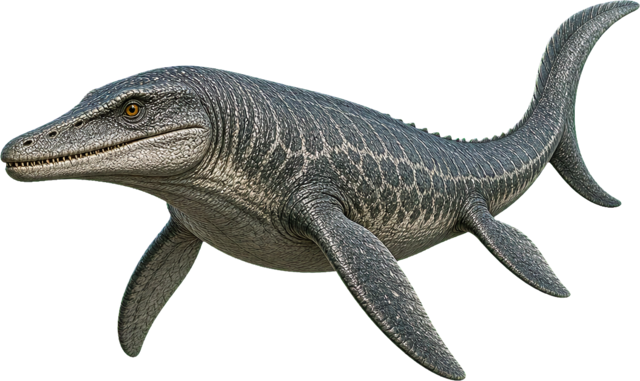
Cretaceous
Tylosaurus
Tylosaurus was a large mosasaur, not a dinosaur, with flippers, a strong tail, and a bony snout.
Read about this dinosaur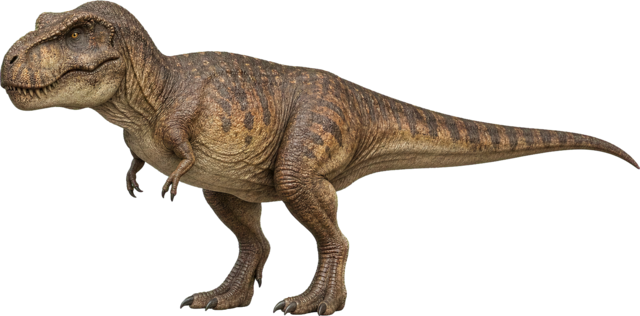
Cretaceous
Tyrannosaurus rex
Tyrannosaurus rex was a huge meat eater with an enormous head, powerful teeth, and short arms.
Read about this dinosaur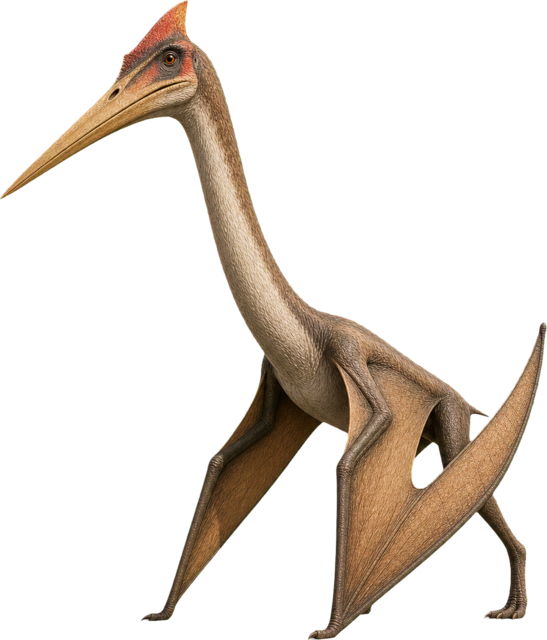
Cretaceous
Quetzalcoatlus
Quetzalcoatlus was a giant pterosaur, not a dinosaur, with a long neck and enormous wingspan.
Read about this dinosaurSources and review
How this page is checked
Names, periods, locations, diets, and size estimates are compared with museum and paleontology reference collections. Estimates are rounded and updated when the underlying content changes.
Last content review: June 22, 2026
Read our research method and sources