

Ankylosaurus magniventris
Ankylosaurus for kids
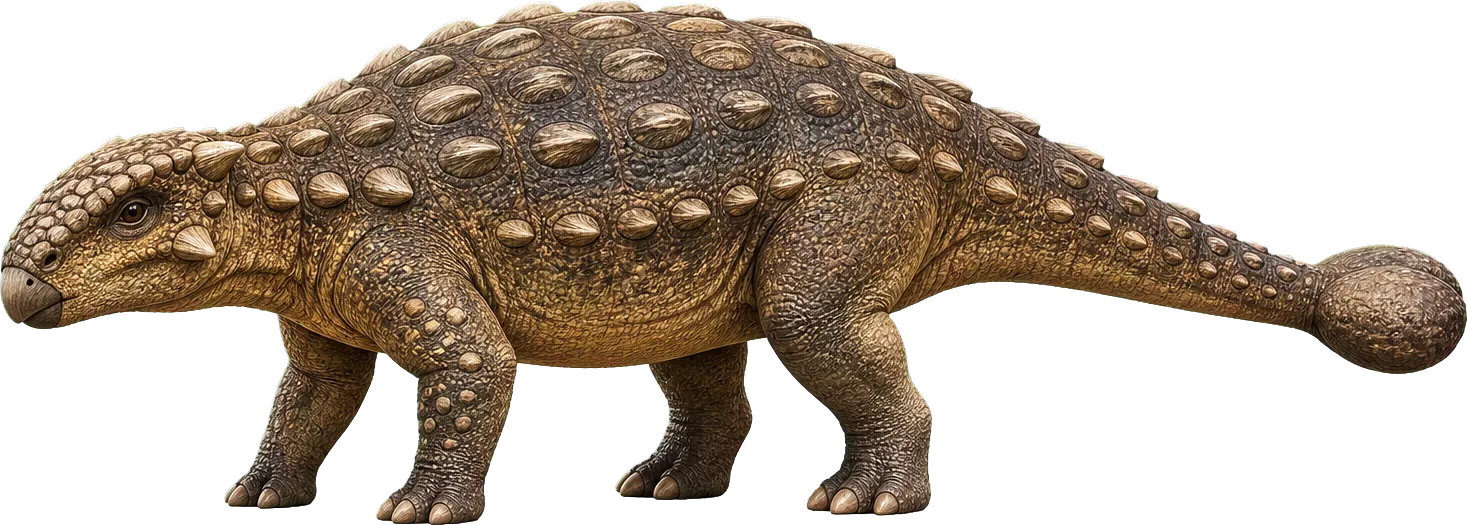
Ankylosaurus carried bony armor in its skin and a heavy club at the end of its tail.
The essentials
What should you know about this dinosaur?
- Length: 8 m long
- Height: 2 m tall
- Weight: about 8 tonnes
- Food: Plant eater
- Time: Cretaceous
- Region: North America
How large was Ankylosaurus
The height line shows the low back. Length and width explain why Ankylosaurus still feels enormous.
Compare in the toolLook a little closer
More about Ankylosaurus
Short chapters for curious children and grown-ups who want to read along.
Ankylosaurus
Ankylosaurus looked as if a plant eater had climbed into armor. Bony plates sat in its skin, the skull was wide and low, and the tail ended in a heavy club. This dinosaur ate low plants, but it was not an easy target. T-Rex lived in the same late Cretaceous world. Any animal coming close had to deal with a shielded back and a tail end built like a swinging hammer.
Size
Ankylosaurus was about eight meters long, but it was not tall like a long-neck. It was wide, low, and heavy, almost like a dinosaur strongbox on four legs. Bony plates covered the back and made skin and skeleton work together like armor. The deep body also helped with eating plants: plenty of belly space, lots of weight close to the ground.
8 m long2 m tallwide body
Food
Ankylosaurus ate plants. Its beak-like mouth worked close to the ground instead of reaching into treetops. The teeth were not hunter teeth; they fit a plant eater. The wide body left room for a big gut, where tough Cretaceous plants could be broken down over time.
plant eaterlow plantswide belly
Habitat
Ankylosaurus lived near the very end of the Cretaceous in North America. Triceratops, Edmontosaurus, and Tyrannosaurus rex shared that broader world. There were rivers, forests, and open places, but Ankylosaurus kept its power low to the ground. Its fossils are rarer than its famous shape suggests, so each bone matters.
North AmericaLate CretaceousT-Rex world
Defense
The tail club was not just a round lump of bone. In front of it, stiff tail bones formed a hard handle, and the heavy knob sat at the end. That let Ankylosaurus swing the tail sideways. The tail club was so heavy and hard that it could even break the bones of attackers. Armor covered the back, neck, and head too. This was serious defense against T-Rex and other predators.
tail clubbony platesstiff tail
Speed
Ankylosaurus was no Gallimimus runner. Its strength was a low, steady walk on four sturdy legs. The body stayed near the ground, the heavy tail followed behind, and the armor sat over the top like a roof. With its low center of gravity, it was very stable and hard to tip over. That calm, solid build fit its defense: hold the ground, turn the body, keep the tail ready.
four legslow stancesteady walk
Did you know?
The famous Ankylosaurus picture comes from several fossil finds, not one perfect complete skeleton. Even so, the shape is unforgettable: flat skull, armor plates, wide ribs, clubbed tail. The name means fused lizard. It fits beautifully, because so much of this animal feels locked together, like protection turned into a living dinosaur.
fused lizardseveral fossilsfamous armor
about 2 m tall
Beside a child, Ankylosaurus is not tower-tall; it is massive. The back stays low, while the body runs long and wide. The tail club belongs to the outline too: a plant eater with a built-in keep-away tool.
Keep reading
Related dinosaurs
Cretaceous
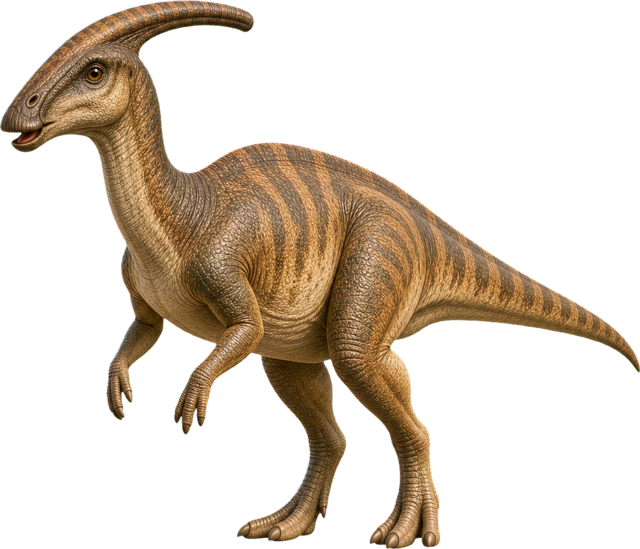
Parasaurolophus
Parasaurolophus was a duck-billed dinosaur with a long hollow crest on its head.
Read about this dinosaur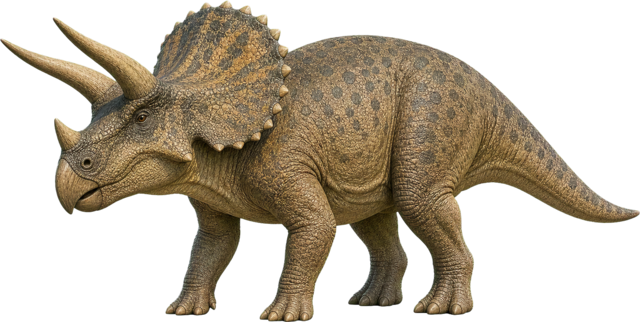
Cretaceous
Triceratops
Triceratops was a large plant eater with three horns, a neck frill, beak, and strong teeth.
Read about this dinosaur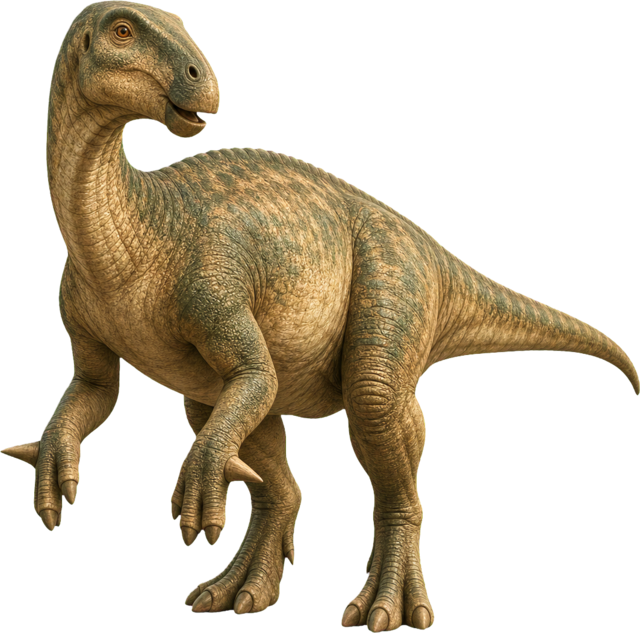
Cretaceous
Iguanodon
Iguanodon was a large plant eater with iguana-like teeth, hoof-like fingers, and a thumb spike.
Read about this dinosaur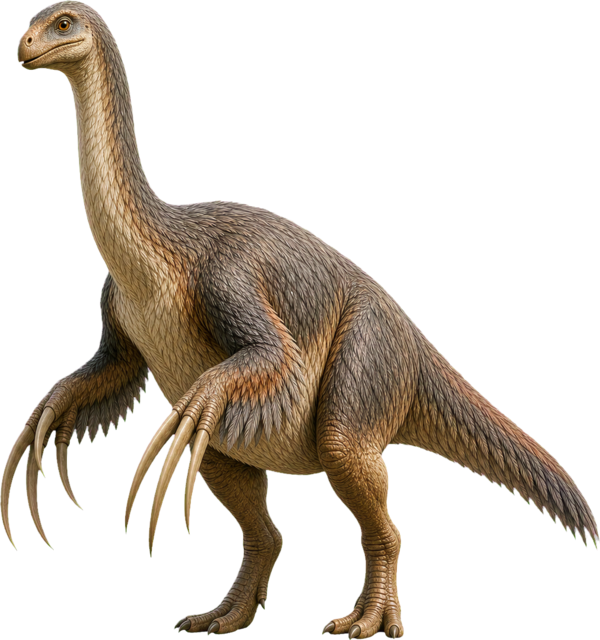
Cretaceous
Therizinosaurus
Therizinosaurus was a strange theropod from Mongolia, with enormous hand claws and a plant-eater body.
Read about this dinosaurSources and review
How this page is checked
Names, periods, locations, diets, and size estimates are compared with museum and paleontology reference collections. Estimates are rounded and updated when the underlying content changes.
Last content review: June 22, 2026
Read our research method and sources