
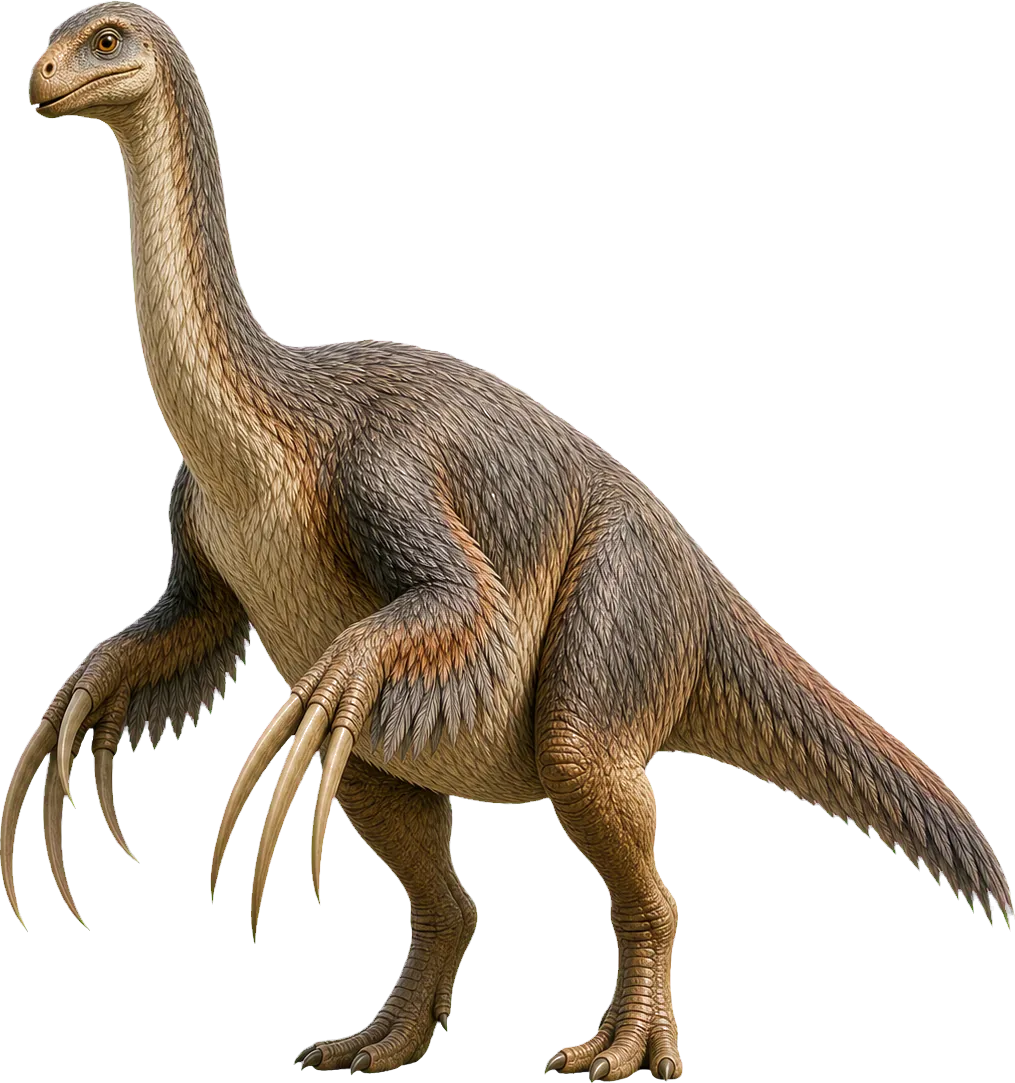
Therizinosaurus cheloniformis
Therizinosaurus for kids
Therizinosaurus was a strange theropod from Mongolia, with enormous hand claws and a plant-eater body.
The essentials
What should you know about this dinosaur?
- Length: 10 m long
- Height: about 4 m tall
- Weight: about 5 tonnes
- Food: Plant eater
- Time: Cretaceous
- Region: Mongolia
How large was Therizinosaurus
The height line shows body and neck. Long arms and claws add a strong outline of their own.
Compare in the toolLook a little closer
More about Therizinosaurus
Short chapters for curious children and grown-ups who want to read along.
Therizinosaurus
Therizinosaurus looks as if a meat-eater relative was rebuilt for plant picking. It belonged to the theropods, the big group that includes many two-legged predators, yet it ate plants. The body had a long neck, small head, big belly, and enormous claws on the hands. Fossils come from Late Cretaceous Mongolia. The claws are so famous that the whole dinosaur feels like a walking puzzle.
Size
Therizinosaurus was about ten meters long and very tall. The body was not predator-slim; it had a big belly. The neck was long, the head fairly small. Then come the hands: long arms with enormous claws that steal the show. At that scale, it looks like a strange giant, part plant eater, part theropod relative with wildly long fingernails.
10 m long4 m tallgiant claws
Food
Therizinosaurus ate plants. The enormous claws fit well for pulling branches closer, gripping plants, or showing off. The long neck brought the head to food, and the big belly could process plants. The wild part is the family connection: a theropod, related to many meat eaters, took its own path and became a huge plant plucker.
plant eaterlong clawsbig belly
Habitat
Therizinosaurus lived in Late Cretaceous Mongolia, in the Nemegt Formation. This was not empty desert sand; it had rivers, plants, and many dinosaurs. Gallimimus, oviraptor relatives, and other strange forms lived there too. Therizinosaurus fits perfectly: a weird specialist in a place full of unusual Cretaceous animals.
MongoliaNemegt FormationLate Cretaceous
Protection
The hand claws of Therizinosaurus could grow extremely long. They were not simply swords to wave around. They could help with feeding, stand out in display, and create distance when needed. Huge body size helped too. Anything coming close would see those long curved claws in front of the belly first. That sends a clear message without roaring.
long hand clawsdistancelarge body
Movement
Therizinosaurus was no sprint hunter. The heavy plant-eater body, long neck, and huge arms fit a calmer, powerful walk. It moved on two legs, with the tail helping balance. Relatives show that therizinosaurs could have feathery bodies. So picture not a smooth lizard giant, but a large fuzzy plant eater armed with huge claws.
two-leggedlong neckfeathery relatives
Did you know?
The first Therizinosaurus finds were mainly giant claws. A find like that can scramble your first guess. The name means scythe lizard, and it took time to understand what kind of animal carried those scythes. Today that strangeness is the best part: a theropod with a plant belly and hand claws that almost deserve their own dinosaur.
scythe lizardclaw fossilstrange theropod
about 4 m tall
Beside a child, Therizinosaurus looks not only tall, but wildly long-armed. The claws hang in front of the body like huge hooks. Its height shows the giant; its hands show the madness.
Keep reading
Related dinosaurs
Cretaceous
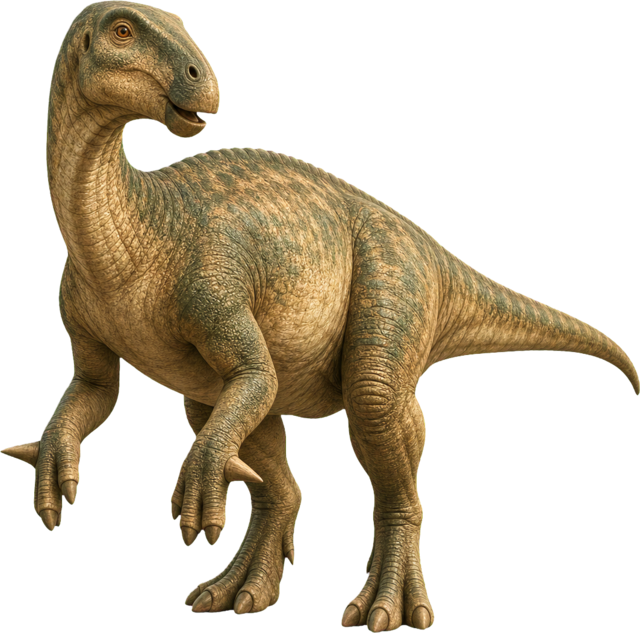
Iguanodon
Iguanodon was a large plant eater with iguana-like teeth, hoof-like fingers, and a thumb spike.
Read about this dinosaur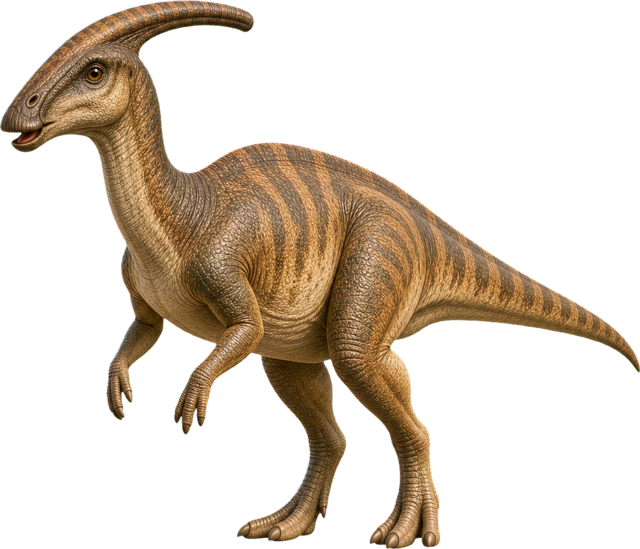
Cretaceous
Parasaurolophus
Parasaurolophus was a duck-billed dinosaur with a long hollow crest on its head.
Read about this dinosaur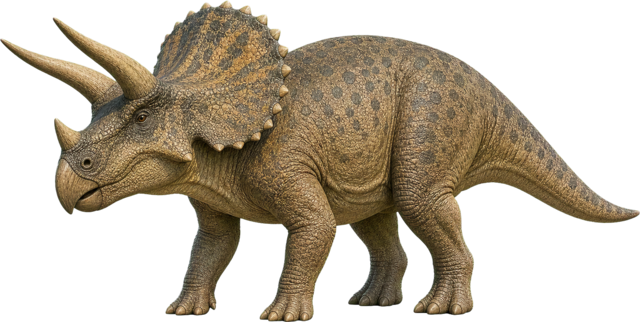
Cretaceous
Triceratops
Triceratops was a large plant eater with three horns, a neck frill, beak, and strong teeth.
Read about this dinosaur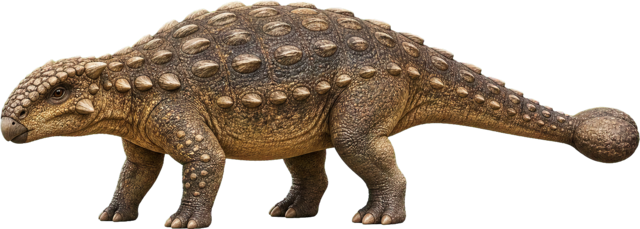
Cretaceous
Ankylosaurus
Ankylosaurus carried bony armor in its skin and a heavy club at the end of its tail.
Read about this dinosaurSources and review
How this page is checked
Names, periods, locations, diets, and size estimates are compared with museum and paleontology reference collections. Estimates are rounded and updated when the underlying content changes.
Last content review: June 22, 2026
Read our research method and sources