

Triceratops horridus
Triceratops for kids
Triceratops was a large plant eater with three horns, a neck frill, beak, and strong teeth.
The essentials
What should you know about this dinosaur?
- Length: 9 m long
- Height: 3 m tall
- Weight: about 8 tonnes
- Food: Plant eater
- Time: Cretaceous
- Region: North America
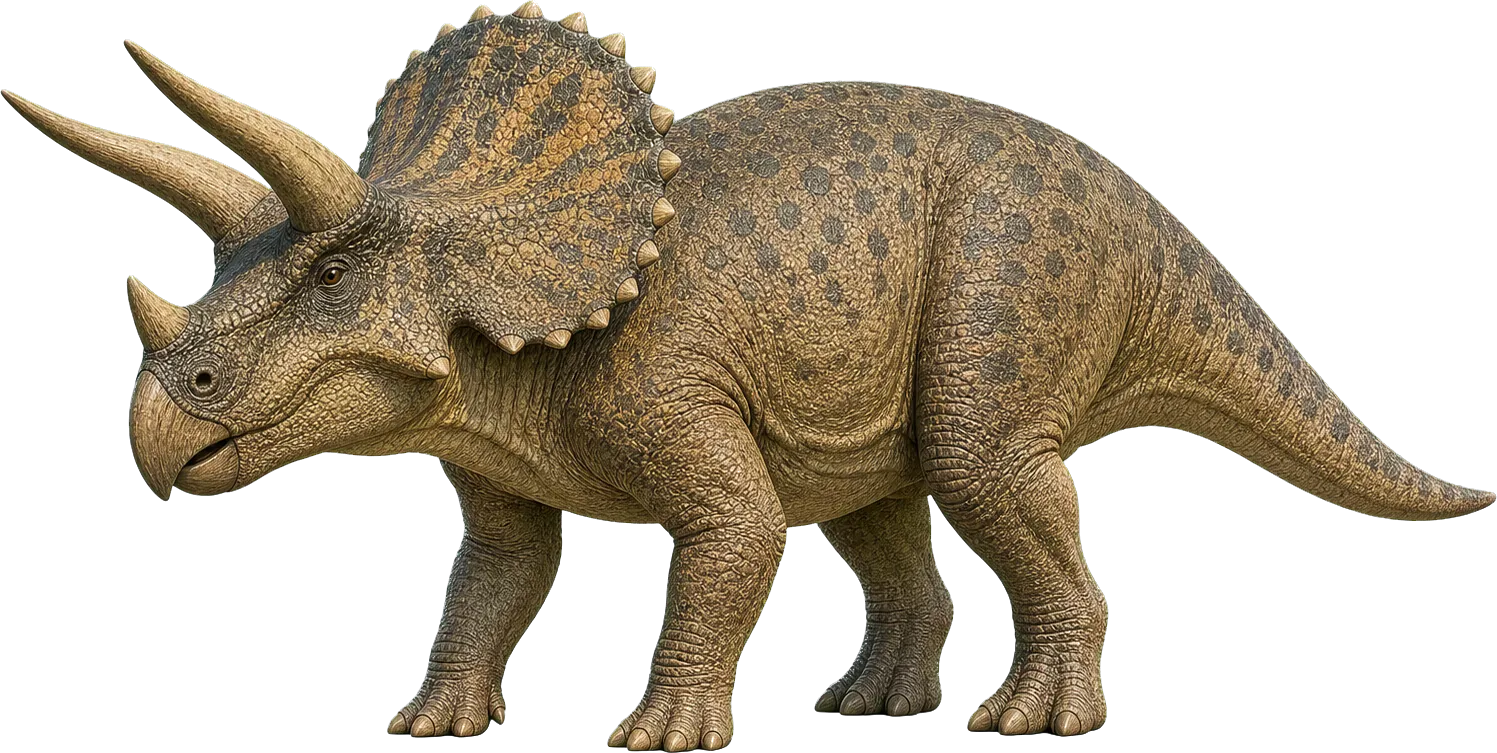
How large was Triceratops
The height line shows back and head area. Horns and frill make the visible head even larger.
Compare in the toolLook a little closer
More about Triceratops
Short chapters for curious children and grown-ups who want to read along.
Triceratops
Triceratops carries its main features right on the face: two long horns above the eyes, a shorter horn on the nose, and a huge neck frill. It lived at the end of the Cretaceous in North America, in the same world as Tyrannosaurus rex. Even with those horns, it was a plant eater. With a beak and many teeth, it could handle tough plants. Fossils even show T-Rex tooth marks on Triceratops bones. Real Cretaceous closeness.
Size
Triceratops was about nine meters long and strongly built. Its skull was one of the most striking heads of any land animal: horns in front, frill behind, beak at the tip. The body stood around three meters high. The neck frill makes the profile even larger. Beside a person, not only the body looks huge; the head steals the scene.
9 m long3 m tallhuge skull
Food
Triceratops ate plants. A strong beak at the front could crop vegetation. Farther back, many teeth worked in rows, almost like a plant-cutting machine. That helped break down tough Cretaceous plants. The horns look like battle gear, but everyday life often began more simply: find food, bite it off, grind it down, keep moving.
plant eaterbeaktooth rows
Habitat
Triceratops lived at the very end of the Cretaceous in North America. The Hell Creek world had rivers, woods, open places, and famous neighbors: Edmontosaurus, Ankylosaurus, and T-Rex. Triceratops was not a rare background animal there. Many skulls and bones show it was one of the classic large plant eaters of those final dinosaur landscapes.
North AmericaHell CreekLate Cretaceous
Defense
The three horns were real keep-away tools. The long brow horns pointed forward, the nose horn sat in the middle, and the frill widened the head behind. Against a large predator, a head like that mattered. Fossil T-Rex tooth marks on Triceratops show these animals met in the same rough world.
three hornsneck frillT-Rex neighbor
Speed
Triceratops walked on four sturdy legs. The head was so large that the front body had serious weight to carry. The tail was not the main tool; the main gear sat up front. Walking Triceratops did not simply copy any living horned animal. It carried its own dinosaur skull with frill, beak, and horns.
four legsstrong front bodylarge head
Did you know?
Smaller Triceratops skulls already show horn and frill shapes. As the animals grew, angles, size, and shape changed. The skull clue is the good part: you can read a life series in the head. A young Triceratops was not just a hornless ball. The three-horn look began early and became more powerful with age.
young hornsgrowthmany skulls
about 3 m tall
Beside a child, Triceratops feels like a living wall with a face. Horns reach forward, the frill makes the head wide, and four strong legs carry the heavy plant eater.
Keep reading
Related dinosaurs
Cretaceous
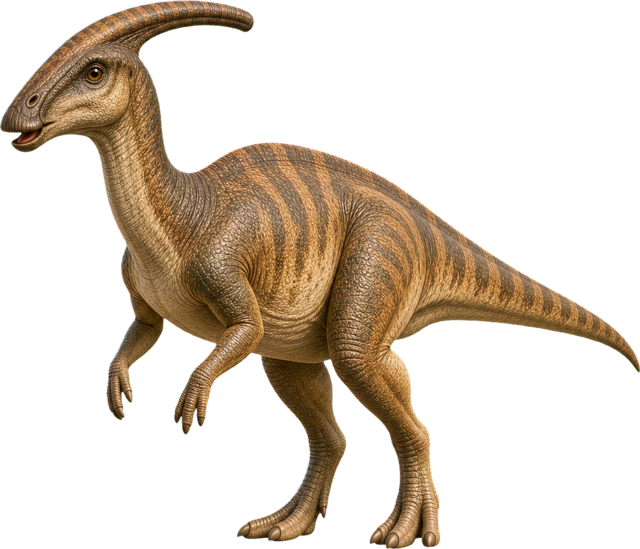
Parasaurolophus
Parasaurolophus was a duck-billed dinosaur with a long hollow crest on its head.
Read about this dinosaur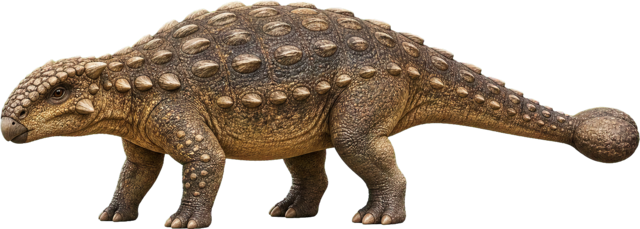
Cretaceous
Ankylosaurus
Ankylosaurus carried bony armor in its skin and a heavy club at the end of its tail.
Read about this dinosaur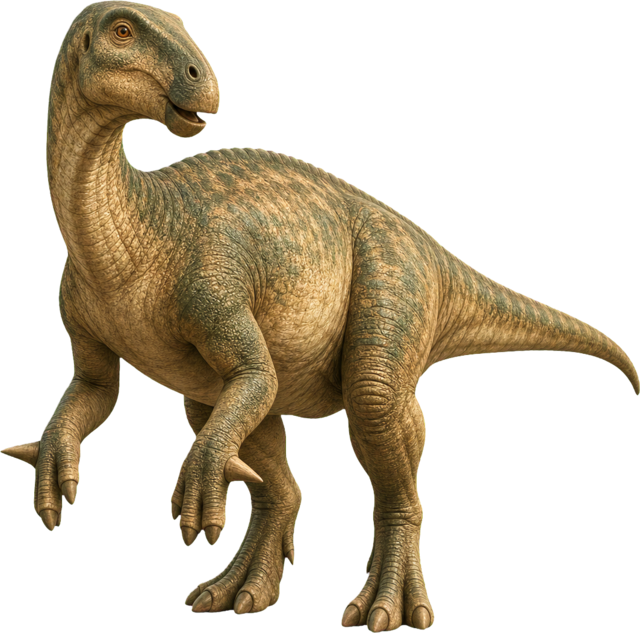
Cretaceous
Iguanodon
Iguanodon was a large plant eater with iguana-like teeth, hoof-like fingers, and a thumb spike.
Read about this dinosaur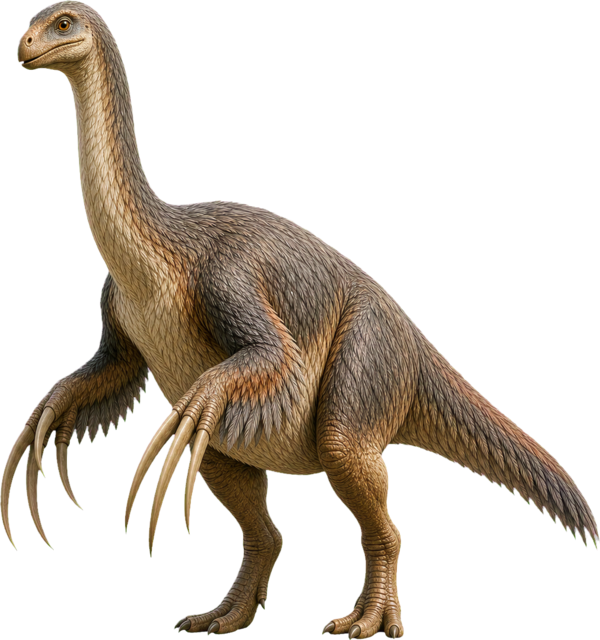
Cretaceous
Therizinosaurus
Therizinosaurus was a strange theropod from Mongolia, with enormous hand claws and a plant-eater body.
Read about this dinosaurSources and review
How this page is checked
Names, periods, locations, diets, and size estimates are compared with museum and paleontology reference collections. Estimates are rounded and updated when the underlying content changes.
Last content review: June 22, 2026
Read our research method and sources